Morning Routine
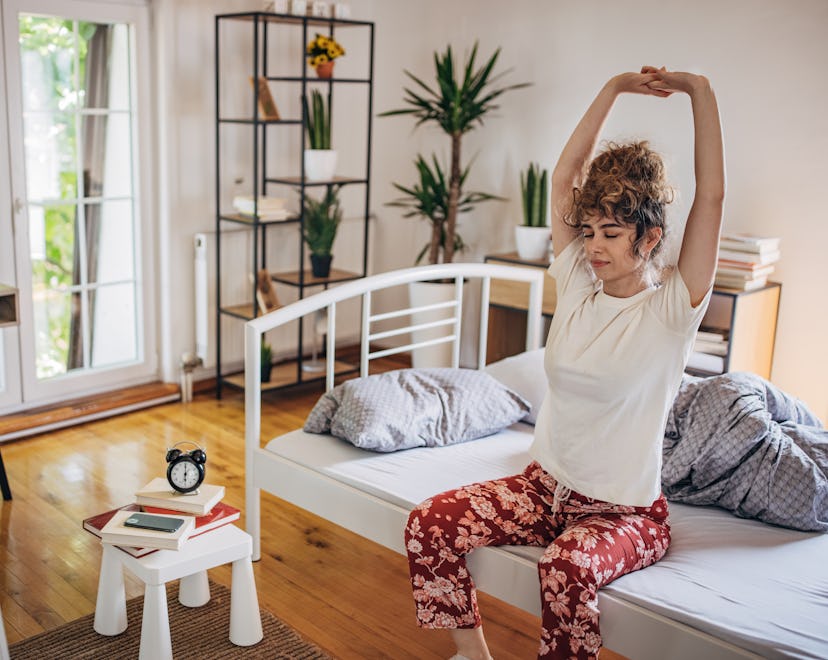
10 Stretches You Should Do As Soon As You Wake Up
Reach, twist, breathe, and repeat.
1. Small Joint Flexes
Warm your body up a bit before more intense stretching by flexing the joints in your wrists and ankles back and forth. As Harvard Health noted, start with small back and forth movements and then move to rolling your ankle and wrist joints before sitting up.Halfpoint Images/Moment/Getty ImagesPhotoAlto/Frederic Cirou/PhotoAlto Agency RF Collections/Getty Images
2. Neck Stretch
Lean your head forward and slightly to one side and use your hand to pull downward. Hold the stretch for approximately 30 seconds and then repeat on the opposite side for a gentle neck stretch, The Mayo Clinic recommended.
3. Full Body Stretch
Laying down, inhale and reach both arms overhead with palms flipped up while extending the legs straight with pointed toes. This stretch can release morning tightness, explained yoga teacher Randi Ragan in Prevention.
Kseniya Ovchinnikova/Moment/Getty Images
Mikael Vaisanen/The Image Bank/Getty Images
4. Knee Pull
While laying on your back, extend one leg out straight and pull the opposite knee up to your chest. Harvard Health recommended grasping your thigh and keeping the foot of your extended leg flexed as you stretch.
5. Supine Twist
Laying on your back, draw your knees into a hug and then let them fall to one side with arms outstretched while looking away from your knees. This gentle move can stretch the spine’s muscles, as yoga teacher Brooke Blocker told Prevention.Adene Sanchez/E+/Getty ImagesAleksandarNakic/E+/Getty Images
7. Side Reach
In a seated position, reach one arm overhead and lean to the opposite side without twisting. This type of side-bend stretch can help strengthen and stretch the intercostal muscles to support the ribs, according to the University of Rochester Medical Center.
PhotoAlto/Frederic Cirou/PhotoAlto Agency RF Collections/Getty Images
8. Child’s Pose
Yogis may recognize this relaxing stretch with extended arms and knees tucked in. Begin on all fours and lower your bottom toward the heels, allowing your forehead to touch the bed. Harvard Health recommended keeping the neck in a neutral position.